viernes, 20 de noviembre de 2009

jueves, 19 de noviembre de 2009
The zhou dynasty

The Zhou Dynasty followed the Shang Dynasty and was followed by the Quin Dynasty in China. The Zhou dynasty lasted longer than any other dynasty in Chinese history though the actual political and military control of China by the dynasty only lasted during the Western Zhou. During the Zhou, the use og iron was introduced to China, while this period of Chinese history produced what many consider the zenith of Chinese bronze-ware making. The dynasty also spans the period in which the written script evolved from the ancient stage as seen in early Western Zhou bronze inscriptions, to the beginnings of the modern stage, in the form of the archaic clerical script that emerged during the late Warring State period.
During the Zhou Dynasty, the origins of native Chinese philosophydeveloped, its initial stages beginning in the 6th century BC. The greatest Chinese philosophers, those who made the greatest impact on later generations of Chinese, were Kong Fuzi, founder of Confucianism, and Laozi, founder of Daoism. Other philosophers, theorists, and schools of thought in this era were Mozi, founder of Mohism, Mengzi, a famous Confucian who expanded upon Kong Fuzi's legacy, Shang Yang and Han Feizi, responsible for the development of ancient Chinese Legalism (the core philosophy of the Qin Dynasty), and Xunzi, who was arguably the center of ancient Chinese intellectual life during his time, even more so than iconic intellectual figures such as Mencius.
During the Zhou Dynasty, the origins of native Chinese philosophydeveloped, its initial stages beginning in the 6th century BC. The greatest Chinese philosophers, those who made the greatest impact on later generations of Chinese, were Kong Fuzi, founder of Confucianism, and Laozi, founder of Daoism. Other philosophers, theorists, and schools of thought in this era were Mozi, founder of Mohism, Mengzi, a famous Confucian who expanded upon Kong Fuzi's legacy, Shang Yang and Han Feizi, responsible for the development of ancient Chinese Legalism (the core philosophy of the Qin Dynasty), and Xunzi, who was arguably the center of ancient Chinese intellectual life during his time, even more so than iconic intellectual figures such as Mencius.
The Shang Dynasty
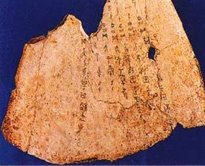


 The Shang dynasty ruled parts of northern and central China. Its capital city was located at Anyang near the border of Henan from about 1384 BCE. This dynasty was based on agriculture; millet, wheat, and barley were the primary crops grown. In addition to the crops, silkworms, pigs, dogs, sheep, and oxen were raised. Aside from their agricultural prowess, the Shang dynasty was also advanced in metallurgy. Bronze ships, weapons, and tools were found from that era.
The Shang dyansty was an aristocrastic society, with a king ruling over the military nobilityti, the Lord on High.
The fall of the Shang dynasty was much like that of the Xia dynasty, the last king was a cruel tyrant. Instead of the people overthrowing the king, he was killed by a king from a rival kingdom, the Chou kingdom. The Chou dynasty was part of the Shang kingdom; its civilization was a combination of the Shang culture and that of non-Chinese civilizations
Suscribirse a:
Entradas (Atom)